Issuu is changing its operating model. It doesn’t really affect me as I only published one thing at Issuu. However, it is precious, a memorial of the extraordinary community that came together when Squinternet Larnia of Love Donna Flora became ill with cancer. We organized a project of bloggers wearing Donna Flora clothing, an A to Z compendium of her outfits and people blogged it. The booklet was published on Issuu, but is no longer available to the public unless I buy a professional account. Silly for one booklet, so I am republishing it here so it is not lost to Second Life people who want to remember our loving friends and the wonderful community of love and support for Squinternet.
The bed in this cabin was really something of a dream. Huge pillows and a big fluffy duvet, I completely loved it. Waking up with this sunrise and the lake with mountains, it was completely the refresh I needed.
What can I say, I’m a needy girl.
The cabin came with an espresso machine, and I ordered in some breakfast. I really could live here, except who am I kidding? Give up my beach? Never.
I kind of got dressed but then I lost my motivation to go anywhere. I’m gonna lay here and read and just enjoy the beautiful vista.
I’m glad to be back on the grid.
Gidge is Enjoying Vacation In: Pants: [Stellar] Yoga Pants (2) red (vintage) Eyebrows: (thin) pink LeLUTKA.EvoX.Freckles.013 Head: / HEAD / lel EvoX NOEL 3.1 Top: Caboodle – Colorblock Sweatshirt – Maitreya Body: Maitreya Mesh Body – LaraX V1.1 Hair: [^.^Ayashi^.^] Kaya hair-M-Premium Skin: [7DS] – BODY 2020 PEACHY bom skin PINEAPPLE browless
I decided to take off for a destination I haven’t checked out before to do some snowboarding and some much needed reflection on what Pixel Gidge is going to get up to this year.
I’m a huge fan of activities on the grid and mastering snowboarding is going to be my thing for at least a week. Maybe two. I really enjoy it but I might need a better snowboard, mine are all random freebie boards from events and they aren’t as well scripted as one might want. If I decide to continue, I’ll definitely start looking around.
I hit the lodge after I did a few runs, deciding that yes in fact I do need a better board. I was glad I made it in time to grab some dinner before I trudged over to the little cabin I had rented.
I definitely recommend this resort. The food was top notch, the service was stellar and you can rent a little getaway cabin for 200L a night just to have a fun little weekend adventure. I’ll put the slurl in the bottom. There is a lot to see and do here, and it would make a fun weekend date, or just some time for yourself to think – like me!
This weird dude stood back there and watched me eat. What the heck weirdo. Don’t be a creeper. These are my scrimps. I’m terrible with flatware. Sorry, I’m uncultured.
You can find lovely vignettes, and cute little cabins for rent as well as skiing and other activities here at Unbreakable Love I rented cabin 31 but I think they are all cute and worth checking out. I rented it for two days. The Northern Lights Winter Resort is absolutely worth a stop.
Definitely pop over, you’ll love it.
Gidge is on vacation in:
Gidge is Headed for a Weekend Away In: Brows: Izzie’s – LeL Evo X – 16 Eyebrows (thin) pink Head: / HEAD / lel EvoX NOEL 3.1 / HUD / lel EvoX (f) 3.1 Outfit: Cute for You – 433 Body: Maitreya Mesh Body – LaraX V1.1 Hair: [^.^Ayashi^.^] Ayano hair Skin: [7DS] – BODY 2020 PEACHY bom skin PINEAPPLE browless Passport and Cig: Aika
I tried to make a nice Sunday dinner, but the truth is, I’m just a terrible cook. Any time you see this many pots out, it’s never going to end well. Bake? Yes, I can bake anything, but cooking is such a different beast – this whole timing of things and just the whole of it is something I always miss at.
I should have know that after shopping at the Fifty Linden Fridays Birthday Bash I would be too tired to concentrate, it was a bad idea from the start. Oh well, I tried. Right?
I ordered pizza after I declared dinner a disaster and sat down with Snake Plisskin to watch a little TV. These old Magnum PI reruns are boss!
Our blog was started by my SL Bestie Cajsa Lilliehook on January 1 2008, I didn’t start blogging until May – but Cajsa took all of my photos for along time because I just didn’t understand it truthfully.
Why did you start Blogging in Second Life?
I started because I was invited by Cajsa to join her on It’s Only Fashion. I figured why not, we did everything else together in SL!
Do you feel the Blogging community in Second Life has changed since you started Blogging, and if so, in what ways?
Yes, in good and bad ways. Maybe it’s more ME that changed. There used to be a lot of cliques – that were very “You’re with us or you’re against us” and honestly I didn’t really even know who the fuck they were. Eventually we did evolve into a more cohesive community but really I think a lot of us just grew up. The community goes through cycles, new bloggers start up, sometimes they’re inventive and amazing, sometimes they think they invented the wheel. We were here when the wheel was a box. The trick for us oldbies (yeah that’s what we call ourselves) is for us not to get arrogant about it. We’ve got to realize that yes, new bloggers do have new things to show us and can help us sharpen the saw for ourselves, to quote old Zig Ziglar.
Do you think that Bloggers have a positive impact on Second Life culture and community, and if so, do you have any stories about that?
I do, I think we are in a lot of ways a big old amoeba of press and news. None of us are the same, well most of us aren’t. Some blog about issues and problems on the grid, some are passionate about the arts, some share info/stories about the varied communities we are part of, some like me have an avatar who has her own little life and she shares it – it’s a story that is random and mostly involves eating.
From the standpoint of when have we made amazing impacts? I think Hair Fair and the positive impacts we’ve made for Wigs for Kids is a great example of that. There have been other fundraisers, giving to charitable organizations that are truly inspiring. Once upon a time a dear friend of many people, Squinternet Larnia, was terminally ill – and we held an event for her at the end of her life, not after she was gone – so that she could see and feel the love the community had for her. She was so touched I found it to be one of the most moving events I’ve ever been a part of.
Our culture is one of caring for one another and I love that.
Are you approachable as a Blogger by content creators that may have interest in you as a Blogger for their Brand/Store?
Of course. I am always honored if someone thinks of me. Do you have any tips or tricks that help you with the Blogging process that you would like to share?
There is a balance to strike between doing what you love and making it work. It’s not work if it doesn’t pay your bills. If you enjoy doing it, then great, do it and have fun. But don’t make yourself crazy doing it. I used to blog every day sometimes more than once a day. I felt this massive obligation to share share share….don’t do that. Blog for YOU first, and you’ll always find the right balance.
Have you yourself ever benefited from another Blogger’s post, such as learning a new skill for Blogging, or Second Life functions that you may not have known about? I learn a ton of things from Sasy https://sasyscarborough.com/ and Gogo juicybomb.com . I’m not a tutorial girl, I’m lazy and want to point and click and make things work, so when it gets complicated those ladies usually have already written how to do it or help me out behind the scenes.
What kind of Blogs appeal to you as a reader, and what would you like to see more of in the Second Life Blogging world?
I don’t read a ton, but I like fun, pretty pics, and I like blogs with personality. I want to know about you and what you love not just stark editorial review.
Do you Blog content that you yourself would wear/use always, or do you blog content that is expected of you to blog due to commitments to stores/events?
I am not currently part of any events, so I’m free of that. I used to blog for most of the major events back in the day, and I loved it. There are some amazing events out there. But being free to blog what I want how I want is really where I am now.
Do you feel that imposed time limits, and a set amount of content featured changes the way you blog content, and does it feel less authentically you?
Oh god yes. Requiring three items per post, three posts etc – there I am trying to figure out how to get a can of spam, a chair and high heels to be in a post about my avatar and her life. When in reality, I’d probably have a lot more items if I was just organically making up a little story for her – but the pressure is counter to letting Gidge live her SLife. Gidge needs to share her real SLife – if it can be called that.
Do you use Social Media, and/or other platforms outside of your Blog/Website to promote the content you have shared? Just plurk – plurk.com/gidge
Do you pay for any aspect of your blogging other than the clothing or items in your images, such as Website Hosting, Photoshop etc?
I pay for premium Flickr. Our friend currently hosts our blog for free – we should probably pay her.
Do you think that Stores/Content Creators should have a Website/Blog for their Brand? I’m not sure, maybe? I can see the value in it, if it had all their items shown maybe? People used to have them. I had one for my pose store. I can’t confirm if it matters really.
Do you have any suggestions for Content Creators/Stores to consider, when it comes to their Bloggers, and Bloggers that they may want to have Blog for them?
I think you need to choose bloggers who are going to showcase your brand the way you want it represented. This might sound like ‘Duh Gidge we know” but really, do you want to be silly or serious? I’ll give you silly, but never editorial unless I’m uninspired. There are people who do amazing editorial work – and that might be the showcase for your work. I’m a prude, no cum slobbering lollipops for me. Is that something you want included in your brand representation on blogs? I mean – if so, yah grab that person! If not – keep looking.
Do you have any advice that you can give other Bloggers that may be new to the experience, or even advice/wisdom that you want to share with the Blogging community as a whole, new or old?
Have fun. Relax. Be kind to one another. Cheer one another on. There is room for all of us.
Do you have suggestions for which Blogging Platform to use, and why you chose it over others? WordPress. Always wordpress.
What do you enjoy and are most passionate about when it comes to Blogging?
Everything.
I would like to challenge my blog partners Cajsa and Rose to participate, Cajsa has been on hiatus but maybe she’ll come around and the AMAZING Sydd Sinister
I went out and about this Sunday to explore more of what the grid has to offer in terms of beautiful builds. You know I’m partial to Asian builds of any type, and this one did not disappoint.
I love this tea ceremony build – it’s beautiful and creative.
This particular part really caught my fancy alas it was just for looks and no food was actually available for my ever hungry avatar. Sad isn’t it? I went away hungry, but still pretty happy because everything was so pretty.
Okay that’s not completely true – I found some ice cream!!
Gidge is Adventuring in; Jeans; Mug – Ava Jean Set – Brows: Eyebrows (soft arch) mint 75% Skin: Guapa – Noela Skin (LELUTKA EVOX) Icy [Browless] Head: / HEAD / lel EvoX NOEL 3.1 Rings: e.marie // Cecilie Rings – Golds { Maitreya F } Hair: Exile:: Esse (Unrigged) Body: Maitreya Mesh Body – LaraX V1.1 Umbrella: Melodic Effect Umbrella Tank; Mug – Ava Tank – Pink Shoes: REIGN.- Knotted Berkin Sandals (MAITREYA-FLAT) Earrings: [HANDverk]Enamel Elephant Shot on Location: maps.secondlife.com/secondlife/A%20Love%20Project/16/137/…
I’m going to have to buy my own surfboard. I went surfing for my Saturday Morning work out and while I actually had a blast, not being able to edit my position was frustrating. I guess I can both surf and fly though, right?
It was a beautiful location anyway, I love a well appointed beach to visit. I live on the water and still seek them out. No such thing as too many beaches.
After my busy day I decided to treat myself, I get so hungry after being outdoors all day, don’t you?
Itsonlyfashionblog.com Gidge is Surfing In: Skin:[Glam Affair] Adele Freckles:LeLUTKA.EvoX.Freckles.013 Headband: * Sparkle Skye Emily Pearl Headband Dbl Head: / HEAD / lel EvoX NOEL 3.1 Rings: e.marie // Cecilie Rings – Golds { Maitreya F } Earrings: EarthStones Shells & Pearls Earring – Iridescent Hair; Exile:: Erya Dinner: Hangry – Cheeseburger Soda Cup {hold} Body: Maitreya Mesh Body – LaraX V1.1 Bikini: MIDNA – Marina Bikini – FRUITS [MT]
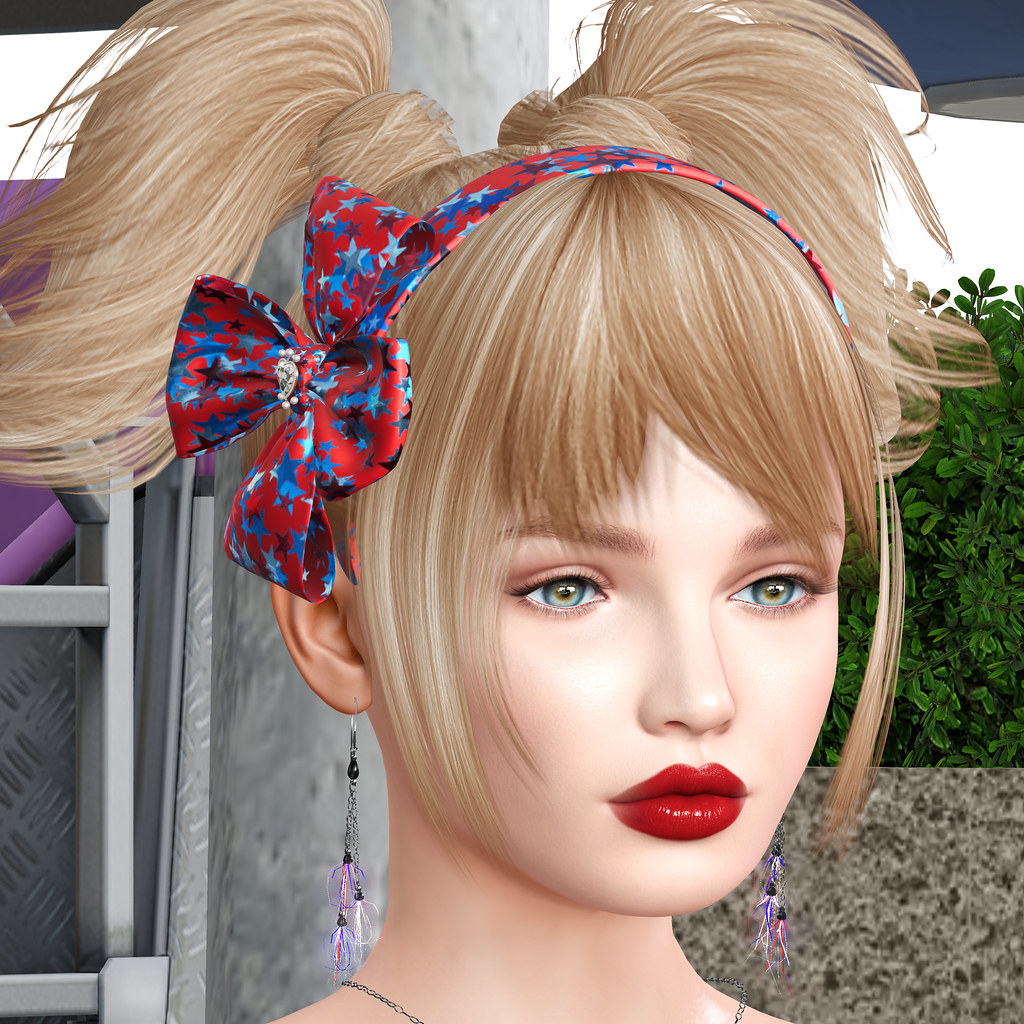
I’m out and about today in the summer heat and I have to admit it’s a pretty good day. I’ve got my trusty tumbler from Sparkle Skye, and this adorable headband to help me be both cute and hydrated.
What are you doing to celebrate the 4th, my fellow Americans? I can’t find the swags I bought for my house last year, and so I’m annoyed. I changed my house color to red and everything! So I don’t know what I’m doing. Heck, probably grilling and swimming, I should dig out a pool.
I got into the back of my jewelry box for some older jewelry from EarthStones. It is called Fireworks and it actually has fireworks animations going – little bursts of light on the necklace and earrings. I know it’s silly but I remember well buying them and being so excited when I did.
I never throw away anything, what can I say?
Gidge is Ready for the 4th in: Skin: [Glam Affair] Adele[Lelutka EvoX] Ivory A Freckles: LeLUTKA.EvoX.Freckles.013 Headbankd: * Sparkle HeadBand Blair Red 4th of July Tumblr: * Sparkle Skye Peony Tumbler – Blue Rose 4th of July Head; / HEAD / lel EvoX NOEL 3.1 Dress: Bjorn:(Lara) Csilla Eyelet Dress – Red Jewelry EarthStones Fireworks – Independence (vintage) Hair: Exile:: Cami Body: Maitreya Mesh Body – LaraX V1.1 Shoes: MALified – Heels of Love (Red): L LaraX COPY MOD MALified – Heels of Love (Red): R LaraX COPY MOD Shot on Location: at Junk Food
I have been wanting to go bowling at Portofino for a while but I was holding out for a bowling shirt. I want a cool bowling shirt. I cannot find one so eventually I said to hell with it and went bowling anyway. I didn’t even have bowling shoes! Whatever I wore new shoes I’m sure it’s okay! Right?
I actually made poses, a million years ago, for bowling AND included a ball with 8 textures. I’ve chosen the sparkly pink ball, of course. I should put these back on MP they aren’t half bad.
After my 10 frames I decided to grab a quick cocktail at a little pub in Portofino and as always, the time spent there was relaxing and lovely. Seriously if I was rolling I’d have a second home over there. It’s lovely.
I picked up a hilarious new table and chairs from Junk Food and couldn’t resist a little al fresco dining this event as the sun set. Seriously, some days don’t you just love the grid?
How many corgis will I eat? ALLLL of them!!
And now I’m off to be awesome, as one does.
itsonlyfashionblog.com Gidge is having fun in: Lips: Shiny stuffs EvoX Vday Gift 3 75% Brows: Izzie’s – LeL Evo X – 16 Eyebrows (thin) pink 75% Freckles: LeLUTKA.EvoX.Freckles.013 Leggings: (fd) Knit Leggings 2.0 – Royal LARAX Head: / HEAD / lel EvoX NOEL 3.1 Necklace”EarthStones With Love Necklace Hair; Exile:: Nyx (B) Food; Junk Food – Corgi Burger Body:Maitreya Mesh Body – LaraX Snakers: Spoiled – Cutie Bow Sneakers Flat (Maitreya) Top: TOP // ELIKATIRA Emmie Halter // LaraX Skin: [7DS] – BODY 2020 MALLORIE bom skin PINEAPPLE browless
How is your Monday going? I’ve been out and about as is my usual today, and I stopped for a hot cup to re-energize me. I’m wearing some new hair from EXILE which is his Hair Fair release and as always Kavar doesn’t disappoint.
I was feeling kinda meh about the start to the week, and my mother always said that when you’re feeling meh you should dress up to improve your attitude. She wasn’t wrong – I feel great!
These fingernails look super long to me. I may be too fancy today, I just don’t know. Probably need some more coffee to figure it out.
Gidge is Hitting Monday Hard In: Brows:Izzie’s – LeL Evo X – 16 Eyebrows (thin) pink 75% Makeup: [Glam Affair] Paulina – Eyes Makeup 2 Makeup:[Glam Affair] Paulina – Lips Toner 3 Lelutka: LeLUTKA.EvoX.Freckles.013 Skin: [Glam Affair] Paulina [Lelutka EvoX] Ivory B Ring: (Yummy) Diamond Solitaire Ring – Gold – Maitreya Head: / HEAD / lel EvoX NOEL 3.1 Nails: backSTORY – Juicy Summer Nails (Maitreya) Dress: Charlotte Dress Maitreya Hair: Exile:: Nyx (B) – HAIR FAIR Body: Maitreya Mesh Body – LaraX V1.1 Earrings: Maxi Gossamer – Earrings – Tokyo Party Night – Neclace: Maxi Gossamer – Necklace – Tokyo Party Night- Short Shoes: [Gos] Amanda Peeptoe Slingbacks – Gold [maitreya] Prop and Poses: Sassy Sweet Poses – But First Coffee -HAIR FAIR